At St Hilda’s, we believe education should empower girls not just to succeed in examinations, but to thrive in the world she will inherit and ultimately help shape. While we continue to deliver strong academic and ATAR results, we know that knowledge on its own is no longer enough.
In an era defined by artificial intelligence, rapid technological advancement and constant global change, today’s girls need to think critically, solve meaningful problems, collaborate effectively and embrace innovation with confidence.
We see preparing young women for this future not only as our commitment, but as our responsibility.
This is why we created ESSTEAM.
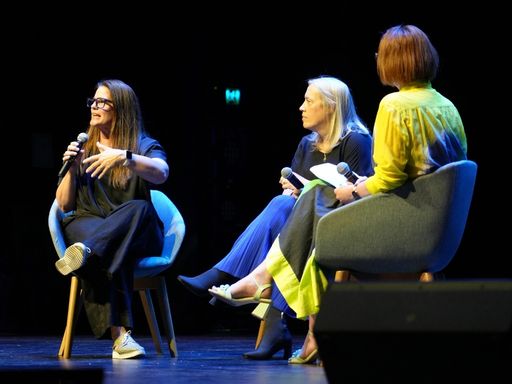
Reflecting on ESSTEAM, Nicole Adams, Director of Junior School, highlights the importance of delivering this program to our youngest learners.
“One of the most exciting parts of leading a Junior School is thinking about the future our students will step into. Our youngest girls will graduate in 2040, a world that will almost certainly look very different from the one we know today. The reality is that we cannot predict the exact careers they will pursue or the technologies they will use. What we can do, however, is ensure they develop the skills, dispositions and confidence to thrive in whatever future awaits them.
This is the thinking behind our ESSTEAM program in the Junior School.
ESSTEAM provides opportunities for students to think deeply and solve complex problems. The program is designed to build the kinds of transferable capabilities that will matter long after specific content is forgotten.
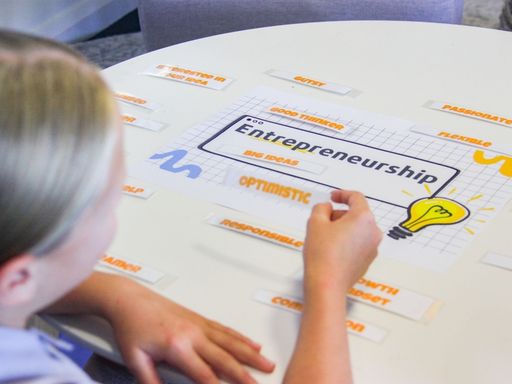
At St Hilda’s, this work is closely connected to the Young Entrepreneurs Academy of Western Australia (YEA WA) skills framework, which focuses on the future-focused capabilities young people need to innovate, lead and become global citizens. Skills such as project management, strategic thinking and collaboration sit at the heart of the ESSTEAM experience.
Importantly, these are not skills we assume children will simply learn along the way. They are explicitly taught and intentionally revisited throughout the Years 3 to 6 journey. By encountering these skills multiple times across different contexts, students build both confidence and competence in applying them to new challenges.
A key strength of the program is the close connection between ESSTEAM units and our Units of Curiosity. This integration ensures that learning is not isolated or abstract. Instead, students see how ideas connect across disciplines and how their learning relates to real world issues and opportunities.
Through ESSTEAM, our girls learn to ask thoughtful questions, test ideas, reflect on their thinking and work collaboratively to find solutions. These are powerful habits of mind that will serve them well, not only in their schooling, but throughout their lives.
While we cannot predict the future our students will graduate into, we can ensure they are equipped with the curiosity, empathy and skills to shape it.”