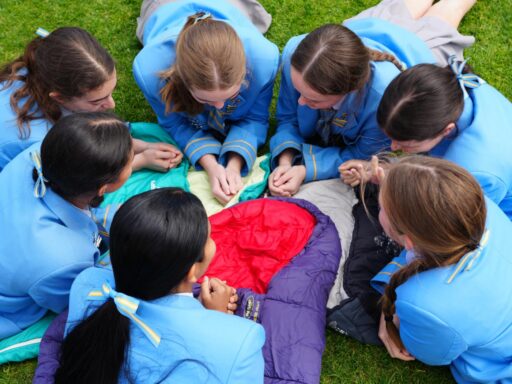
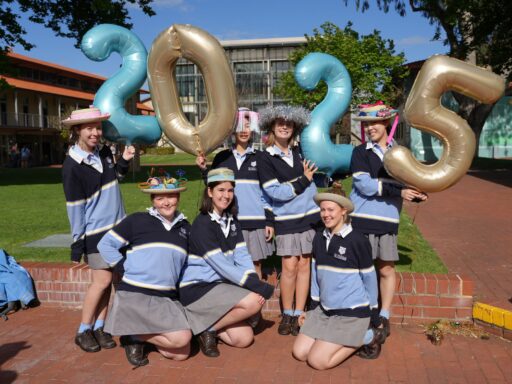
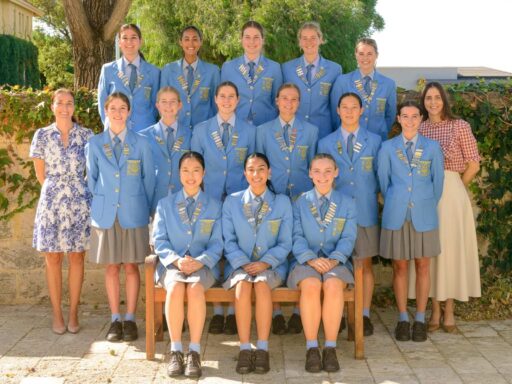
As we celebrate National Boarding Week, we proudly reflect on 120 years of Boarding life at St Hilda’s and honour the lasting contributions Boarding students have made to our vibrant community.
To mark the beginning of National Boarding Week, our Boarding Officials hosted a special assembly, bringing to life stories from generations of Boarders and offering students a glimpse into the rich history of Boarding at St Hilda’s.
120 Years of Boarding at St Hilda’s: A Timeline
We’re delighted to offer a glimpse into the history highlighted in the assembly.
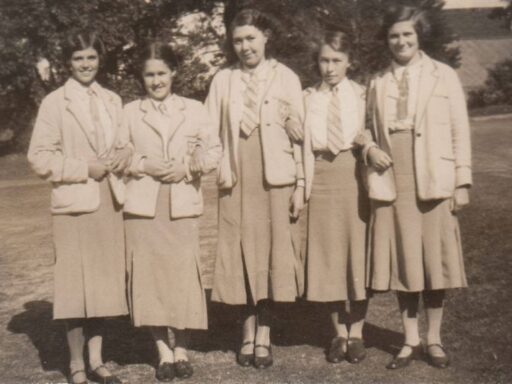
Boarding at St Hilda’s began 120 years ago in 1906, when the School, then known as Girls High School and located on the current Christ Church campus, welcomed its very first Boarders. Starting with just two students, the boarding community grew to six by the end of that year and to 29 by 1908. By 1918, the number of Boarders had reached 70, reflecting the strong demand for a St Hilda’s education even in our early years.
In 1931, the school relocated to our current Bay View campus, where Boarders were housed upstairs in Catherine House. Just a few years later, in 1934, Margaret House was built to accommodate Junior School Boarders.
During World War II, Boarding life faced unique challenges. In 1942, with the threat of war, 69 Boarders were evacuated to Bencubbin in the Wheatbelt, while day students remained on campus.
As the School continued to grow, so too did its Boarding facilities. In 1960, Boarding expanded into Parnell House for senior students, while Catherine House and Margaret House continued to accommodate other year levels. A new Margaret House was built in 1963, and remains part of the current Boarding house today.
A significant moment in the school’s more recent history occurred in 1999, when Parnell House was severely damaged by fire. During its restoration, Boarders were temporarily relocated to where our Chidley campus stands today.
In 2001, the current Boarding house was officially completed, incorporating elements of the original Margaret House, reminders of the rich history and enduring spirit of Boarding at St Hilda’s. Today, our Boarding students live in this same Boarding House, which had a full refurbishment in 2019.
Boarding Through the Generations
Some of our current Boarding students also interviewed family members who boarded at St Hilda’s throughout the years.
Jenny’s Story (Class of 1969)
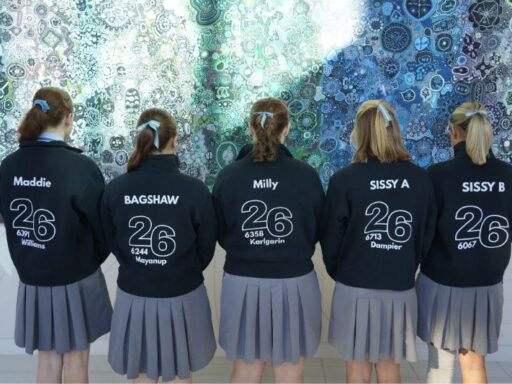
Year 12 student and fifth generation St Hilda’s Boarder Maddie interviewed her Grandmother Jenny (Class of 1969).
When Maddie asked Jenny about how she thinks Boarding has changed from generation to generation, Jenny responded:
“The lack of communication is a big difference in the Boarders. We didn’t have phones. There was one phone next to the hall that Boarders were allowed to use. You only used it when something was really serious because you had to reverse charges. But you had to queue and everybody heard all the conversation. There was no privacy, very little communication, so we wrote letters. We had to write letters once a week and we used to hang out for letters, mail delivery. And it used to get put up on the board, those who got letters.”
Gemma and Isabella’s Stories (Classes of 1989 and 2015)
Year 12 Boarder Eloise interviewed her Aunty Gemma (Class of 1989) and Cousin Isabella (Class of 2015).
Eloise asked Gemma about what the Boarding House looked like during her time at St Hilda’s:
“Long lines of beds. And at the end of each Boarding House there was a room with two beds, and that housed two Year 12s on each level and they were our Boarding prefects. They were the ones we went to if we had problems.”
Isabella spoke of life in the Boarding House during the term:
“On the weekends, pretty much no one went home. There were always lots of activities on at Boarding, so we didn’t really have the need to go home. It was fun, because I had 35 girls in my year group, so there’d be at least 80% of them in there on the weekend, so it was good fun.”
Celebrating 120 Years of Boarding
As we celebrate National Boarding Week and this milestone of 120 years, we honour not only the rich history of Boarding at St Hilda’s, but also the enduring spirit that continues to shape it today. From its humble beginnings to the thriving community it is now, Boarding remains a place where lifelong friendships are formed, resilience is nurtured and a strong sense of belonging continues across generations.