Why entrepreneurship matters for girls – and why it starts earlier than you might think
When parents hear the word entrepreneurship, it can be easy to picture business plans, start-ups and young people pitching ideas to investors.
But entrepreneurship education at school is about something much broader.
It is about helping girls recognise opportunities, solve problems, develop ideas, respond to feedback and turn their thinking into action. It gives them opportunities to practise creativity, adaptability, collaboration, leadership and decision-making – skills that matter whether they eventually become entrepreneurs, doctors, engineers, designers, researchers, artists or work in careers that do not yet exist.
For girls, there is real value in having repeated opportunities to put forward an idea, take a calculated risk, lead others and learn that an idea does not have to be perfect before it can be tested.
That is the thinking behind ESSTEAM™ at St Hilda’s.
So, what is ESSTEAM?
ESSTEAM™ is St Hilda’s approach to developing an entrepreneurial mindset through the lens of sustainability, using Science, Technology, English, the Arts and Mathematics.
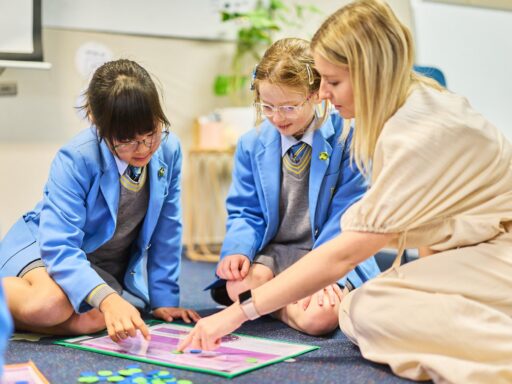
Rather than keeping these areas separate, girls draw on knowledge from different subjects to explore real problems, develop possible solutions and create something of value.
The important point is that ESSTEAM™ is not about producing entrepreneurs.
It is about helping our girls become people who can think creatively and critically, work well with others, adapt when something changes and have the confidence to act on their ideas.
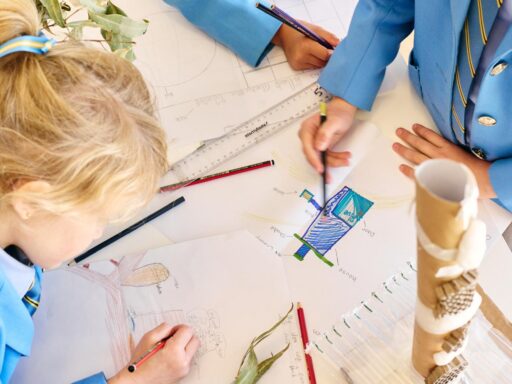
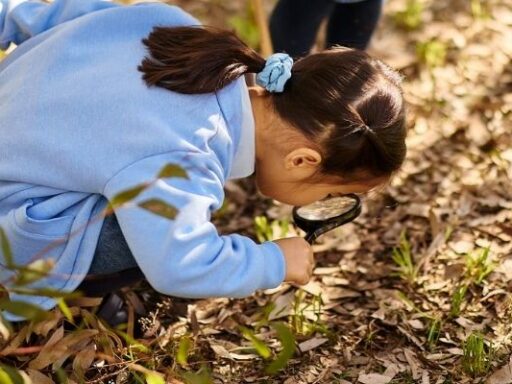
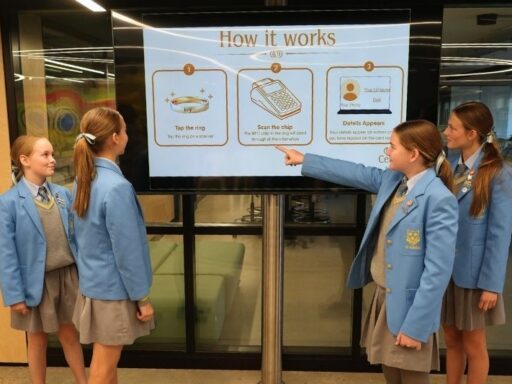
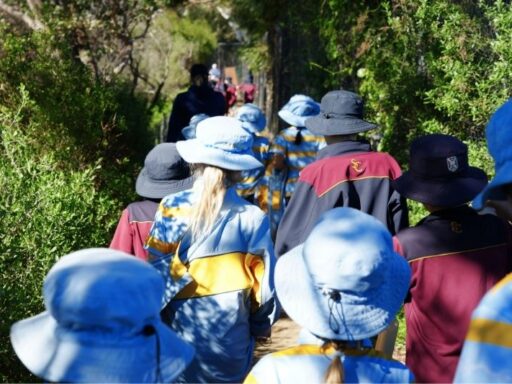
Through ESSTEAM, girls might investigate biodiversity before designing a habitat for native wildlife, explore housing affordability before designing a sustainable tiny home, examine the environmental impact of fashion, or consider how technology could help solve a future problem.
The topic may change, but the deeper learning is consistent: How do I understand this problem? What do I already know? What do I need to find out? Who is affected? What could I create? And how could I make it better?
Learning to see the bigger picture
One of the most important parts of ESSTEAM™ is the way girls learn to look at problems.
Through ESSTEAM, we apply a systems lens to sustainability.
In simple terms, that means helping girls understand that most real-world problems do not exist on their own.
Take housing, for example. Designing a more sustainable home is not simply an engineering problem. Girls may need to consider cost, the environment, the people who will live there, available materials, energy use, climate and the needs of the wider community.
A solution that works brilliantly in one area may create a problem somewhere else.
So instead of simply asking, Can we solve this?, girls learn to ask broader questions:
Who will this affect? What else might change? Is this practical? Is it responsible? Could there be a better way?
That kind of thinking becomes increasingly important as the problems our girls will encounter become more complex.
The ESSTEAM™ program deliberately connects learning with community, industry and real-world issues rather than treating sustainability as a standalone topic.
What does this have to do with entrepreneurship?
Quite a lot.
Entrepreneurs notice things.
They recognise that something could work better, see an opportunity others may have missed and then explore whether they can do something about it.
That same way of thinking can be valuable in almost any field.
A scientist may identify a new avenue for research. An engineer might rethink how something is designed. A doctor may see an opportunity to improve patient care. A community leader might recognise a problem that has been accepted for too long.
Entrepreneurial thinking helps girls move from “I can see the problem” to “What could I do about it?”
And that shift is important.
Why does entrepreneurship matter particularly for girls?
Girls do not lack ideas or ability.
But having a good idea and being prepared to put it forward are not quite the same thing.
Entrepreneurial learning gives girls a safe place to practise that second part.
They have to communicate what they think. Make decisions. Work with different personalities. Defend an idea. Listen when someone disagrees. Change direction when the evidence suggests they should. Sometimes lead. Sometimes follow.
And importantly, they learn that something not working the first time is normal.
A prototype may fail. Feedback might reveal a problem they had not considered. An original idea might need to be completely redesigned.
In entrepreneurship, that is not necessarily failure. It is information.
For girls who can sometimes place pressure on themselves to get things right, experiences like these can help build confidence in a different way – not confidence based on always knowing the answer, but confidence based on knowing how to respond when they do not.
Building these skills over time
At St Hilda’s, entrepreneurship does not suddenly appear when girls reach Senior School.
ESSTEAM™ runs from Years 3–9, with the learning becoming more complex as girls grow. The program is underpinned by the Young Entrepreneurs Academy of WA (YEWA) Framework, which provides a structure for developing entrepreneurial capability over time.
In Years 3 and 4, girls begin by exploring Communities and Connections. They look at how people, living systems and technologies are connected and consider how design can support community wellbeing.
In Years 5 and 6, the focus develops into Problem Solvers and Systems Thinkers. Girls tackle more complex real-world challenges and begin considering the human, social and environmental consequences of different solutions.
In Years 7 and 8, Design for Impact asks girls to think more deeply about sustainability, technology, ethics and responsible innovation.
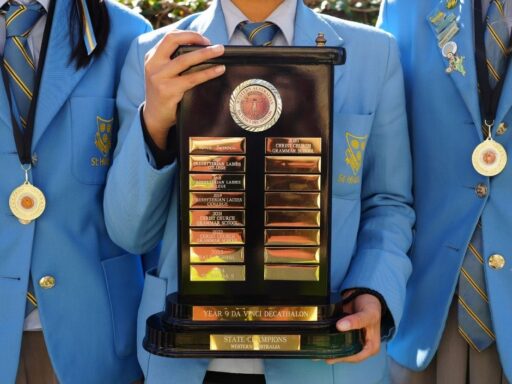
By Year 9, the focus moves towards Entrepreneurship and Leadership, with girls developing ideas into more viable solutions, working in teams, communicating with authentic audiences and thinking about how an idea can create genuine value.
The skills build with them.
A younger girl might begin by contributing an idea and trying something unfamiliar with support.
Later she might need to evaluate several possible solutions, seek feedback, make decisions and take responsibility for part of a project.
Eventually she may be leading a team, managing a project, pitching an idea or changing direction because new information has challenged her original thinking.
That progression is deliberate.
More than the final product
One of the easiest mistakes to make with project-based learning is to focus on what girls produce at the end.
The model. The presentation. The prototype. The pitch.
Those things matter, but they are not the whole point.
What matters just as much is what happened along the way.
Did she ask better questions?
Did she listen to another perspective?
Did she change her thinking when presented with new information?
Did she take responsibility?
Did she persevere when something did not work?
Did she help her group move forward?
Did she become more confident making decisions?
St Hilda’s ESSTEAM™ framework focuses on five broad areas of growth: Thinking and Innovation, Growth and Adaptability, Agency, Collaboration and Leadership, and Project Management. Girls are encouraged to reflect on how these capabilities are developing rather than seeing them as something they simply ‘pass’ or ‘master’.
Preparing girls to shape what comes next
We cannot predict exactly what our girls’ careers will look like.
Technology will change. Industries will evolve. Entirely new opportunities will emerge.
What we can do is give girls strong knowledge and teach them how to use it.
That is ultimately what entrepreneurship education is about.
It is not about convincing every girl to start a company.
It is about helping her notice possibilities, understand complex problems, work with others, back an idea, respond when things change and have the confidence to turn thinking into action.
Because whether she eventually becomes an entrepreneur or never starts a business in her life, those capabilities will still matter.
We want our girls not simply to enter a changing world, but to feel capable of helping shape it.
Keep Exploring
Learn more about our ESSTEAM™ program or book a tour to see ESSTEAM in action.