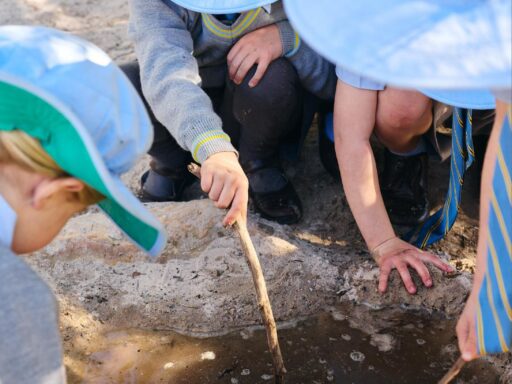
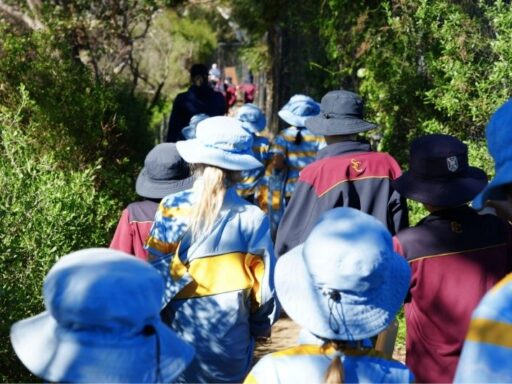
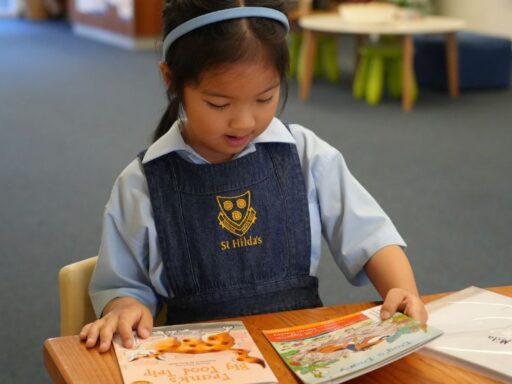
Some of the most valuable learning experiences happen beyond the classroom. A puddle becomes a scientific experiment, a fallen branch sparks an imaginative adventure, and a simple question about the natural world leads to a new discovery.
At St Hilda’s Junior School, we recognise that nature is more than a backdrop for play. It is a rich and ever-changing learning environment that encourages girls to explore, question, create and discover.
From sensory exploration in the early years to outdoor investigations and hands-on learning experiences, nature play provides opportunities for girls to develop the skills, confidence and curiosity that underpin lifelong learning.
Why Nature Play Matters
Nature play is about giving children opportunities to engage with the natural world through exploration, discovery and imagination.
Unlike highly structured activities, nature play often has no predetermined outcome. Children are encouraged to follow their curiosity, make decisions, test ideas and discover what works.
Research suggests that access to natural environments and outdoor play can support children’s physical development, attention, emotional wellbeing and social skills.
At St Hilda’s, these experiences complement classroom learning, allowing girls to apply their knowledge in meaningful, practical ways while developing a deeper connection with the world around them.
Curiosity Is the Beginning of Learning
Children are naturally inquisitive, and the outdoors provides endless opportunities to ask questions.
Why do some objects float while others sink? How does water find its way downhill? What happens to a plant as it grows? Why are insects attracted to certain environments?
These questions encourage girls to observe closely, investigate possibilities and think critically.
Through nature play, children become active participants in their learning rather than simply receiving information. They make predictions, experiment with different approaches and discover that finding an answer can be just as exciting as asking the question.
These experiences help build early foundations in Science, Mathematics and problem solving, while nurturing a genuine love of discovery.
Building Confidence, Independence and Resilience
Nature provides opportunities for children to experience manageable challenges and learn through trial and error.
Whether balancing on uneven ground, experimenting with materials or working out how to make a water channel flow, girls develop confidence by trying something new.
Not every idea works the first time, and that is part of the learning.
When children are encouraged to adjust their approach, persevere and try again, they begin to understand that mistakes are opportunities to learn.
These everyday experiences help develop independence, adaptability and resilience, skills that become increasingly important as girls progress through their education.
Supporting Wellbeing Through Outdoor Learning
Time spent in natural environments can play an important role in supporting children’s physical and emotional wellbeing.
Outdoor play encourages movement and physical activity, helping girls develop strength, coordination, balance and spatial awareness.
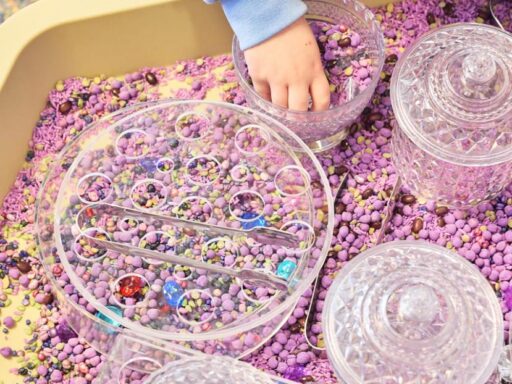
Natural spaces can also provide opportunities for calm, focus and sensory exploration. The feeling of water running through their hands, the texture of natural materials or the sounds of the outdoors can invite children to slow down, concentrate and engage with their surroundings.
For young learners, these experiences can support emotional regulation, reduce stress and encourage a positive relationship with the natural environment.
Nature play also offers the freedom to move between energetic activity, quiet observation and imaginative exploration, recognising that children learn and recharge in different ways.
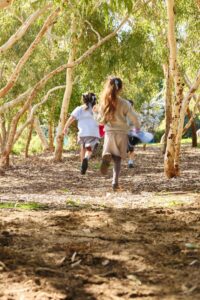
Growing Friendships and Social Skills
Some of the richest opportunities for social learning happen when children work together without a prescribed set of instructions.
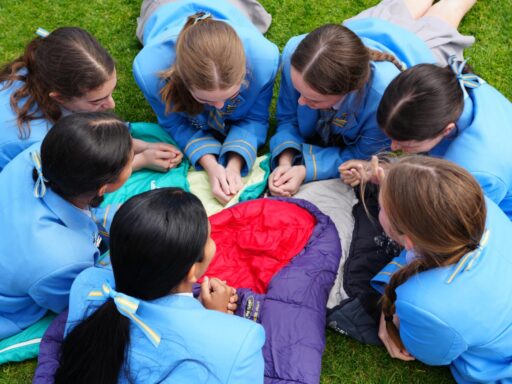
Creating an imaginary world, experimenting with water or investigating a natural discovery encourages girls to share ideas, negotiate, listen and collaborate.
They learn when to lead, when to follow and how to work through different perspectives.
Through these experiences, girls develop communication skills, empathy, patience and a sense of belonging.
They also discover that the best ideas often come from working together.
Inspiring Creativity and Imagination
One of the joys of nature play is that ordinary objects can become extraordinary possibilities.
A collection of leaves might become ingredients in an imaginary café. Sand and water might transform into a landscape of rivers and lakes. Natural materials might inspire a construction project or an entirely new game.
Without a single correct way to play, girls are free to experiment, invent and express their ideas.
This open ended exploration encourages creative thinking, language development and the confidence to approach challenges from different perspectives.
It also helps children develop the imaginative and adaptive thinking skills that remain valuable throughout their lives.
Connecting Learning with the Natural World
Nature play also encourages girls to develop an appreciation for the environment and their place within it.
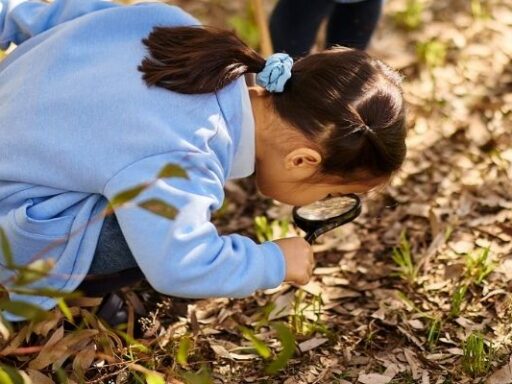
Observing insects, exploring plant growth and noticing seasonal changes helps children understand that the natural world is made up of interconnected living systems.
These firsthand experiences can inspire conversations about sustainability, biodiversity and the importance of caring for the environment.
By developing a connection with nature from an early age, girls are encouraged to become thoughtful, curious and responsible members of their community.
Nature Play at St Hilda’s Junior School
At St Hilda’s, our Chidley campus provides an environment where girls are encouraged to explore, discover and connect with the natural world.
With dedicated nature play areas, outdoor learning spaces and opportunities for hands on exploration, the campus encourages girls to be curious, imaginative and active participants in their learning.
In the early years, our recently upgraded Pre Primary water playground provides opportunities for sensory exploration, experimentation and discovery. As girls pour, redirect and investigate the movement of water, they explore early scientific and mathematical concepts while developing physical coordination, creativity and collaboration.
As girls progress through Junior School, opportunities for nature play continue to evolve. Our nature playground encourages climbing, building cubby houses, imaginative play and the confidence to explore their physical abilities. These experiences provide opportunities for girls to challenge themselves, work together, solve problems and build resilience.
Learning beyond the classroom also extends to our Outdoor Education program, where experiences such as Little Wanderers in Year 3 and visits to our Yeagarup campus in Years 5 and 6 allow girls to develop independence, strengthen friendships and deepen their connection with the natural environment.
Together, these experiences reflect our belief that learning is not confined to four walls. From the playgrounds of our Chidley campus to the natural landscapes of Yeagarup, girls are encouraged to question, explore and discover, developing the curiosity, confidence and adaptability that will serve them throughout their lives.
Book a Tour to discover how our Junior School inspires curiosity and a love of learning from the very beginning.