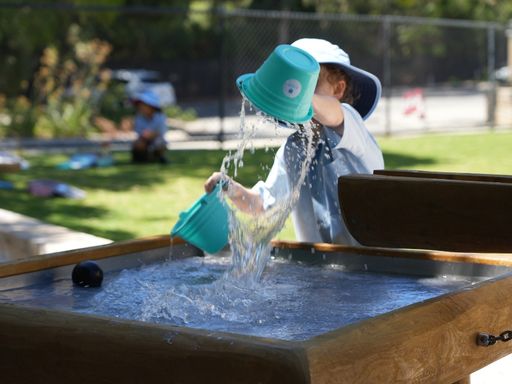
Water play facilities are more than just a fun way for students to cool off on warm days, they’re vibrant learning environments that support physical, social, emotional and cognitive development. Whether it’s splashing, pouring, problem‑solving or teamwork, water play offers rich opportunities for growth. That’s why our Pre Primary play area has been upgraded with a new water playground!
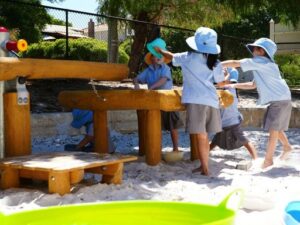
Benefits of water play include:
Building Physical Skills and Coordination
Water play invites children to move, lift, pour, balance and coordinate. These simple actions help students build essential physical abilities, including fine motor skills through filling containers and hand-eye coordination when transferring water between containers.
Because water creates resistance and unpredictability, it encourages students to move with purpose, confidence and awareness of their bodies.
Encouraging Curiosity and Cognitive Development
Water is one of the most powerful natural teaching tools. Through open ended exploration, children begin to experiment with:
- Cause and effect with students beginning to wonder, ‘what happens if I block the stream?’
- Measurement and volume by considering ‘which container holds more?’
- Problem solving as they redirect water or figure out how to fill a bucket faster
- Scientific thinking by oberving movement, flow and pressure
These moments of discovery nurture early STEM learning in a playful, organic way.
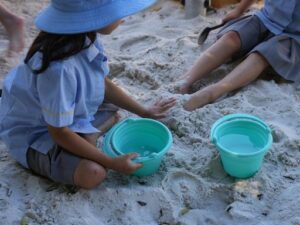
Strengthening Social Skills and Teamwork
Water play naturally encourages students to work together. Shared spaces like splash areas or water tables become social hubs where children learn to take turns and share equipment, communicate their ideas, collaborate on building rivers, channels or imaginative water worlds and practise kindness, patience and teamwork.
These interactions help children develop social confidence and a strong sense of belonging.
Supporting Emotional Wellbeing
Water has a calming, therapeutic quality. Many students find comfort in the rhythm of pouring, the cool sensory experience and the freedom of open ended play.
Water activities can help students:
- Reduce stress and anxiety
- Express emotions through movement and creativity
- Build resilience through trial and error
- Enjoy mindful moments in nature
These benefits support positive mental health and emotional growth.
Fostering Creativity and Imagination
Water is endlessly adaptable, one moment it’s a river, the next it’s a potion, a tea party, a science lab or a construction site. This flexibility inspires imaginative storytelling and role play, allowing students to take the lead in their learning.
Creative play nurtures innovative thinking, language development, confidence and self‑expression.