No two children are the same. One girl may grasp a new Mathematics concept quickly and be ready to explore it more deeply, while another may need more time, a different explanation or additional practice. The same girl may need greater challenge in one area and extra support in another.
At St Hilda’s, we recognise these differences and respond to them every day.
Knowing where each girl is in her learning
Supporting every learner begins with knowing each girl well.
Our teachers draw on classroom observations, assessment data, standardised testing, tracking data and their professional judgement to understand what a girl already knows, where there may be gaps and when she is ready to move further.
This information is not simply collected at the end of a unit or Semester. It is collected and used throughout the learning process so teachers can adjust what happens next.
Sometimes that might mean spending more time consolidating an important concept. At other times, it could mean introducing greater complexity or giving a girl the opportunity to apply her knowledge in a new way.
The goal is not for every girl to be doing exactly the same thing at exactly the same time. It is for every girl to be making meaningful progress.
What does differentiated learning look like in the classroom?
Differentiation simply means responding to where a girl is in her learning.
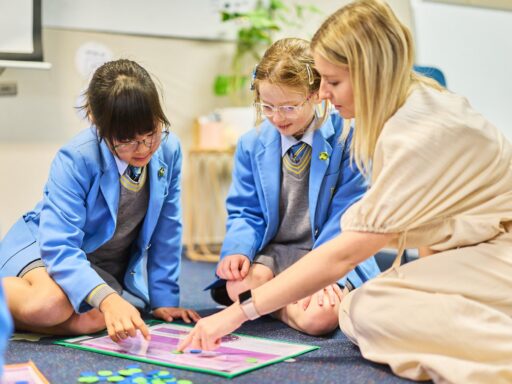
In a Junior School classroom, this can take many forms. A teacher might bring together a small group of girls who would benefit from revisiting a concept, provide additional scaffolding for a task, use flexible groups based on current understanding, or offer a more complex problem to girls who are ready to extend their thinking.
Importantly, these groups are not fixed. A girl may need support with one concept and greater challenge with the next.
This flexibility allows teachers to respond to what girls need as their learning develops.
Support when she needs it
Almost every child will need additional support at some point in her learning.
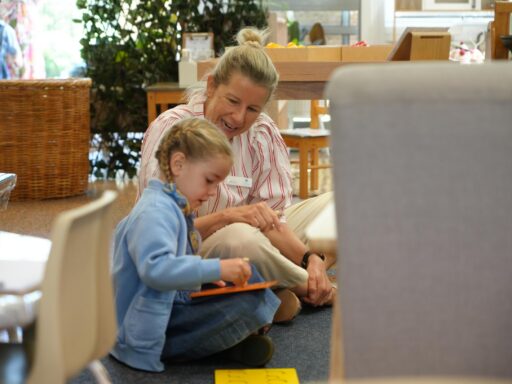
When a teacher identifies that a girl has not yet fully understood a concept, additional opportunities can be provided to revisit, practise and consolidate that learning.
For some girls, more targeted intervention may be appropriate. Further assessment can help identify specific areas of need, allowing teachers and specialist staff to provide focused support through individual or small group learning.
The aim is to identify gaps early and give girls the support they need to continue moving forward with confidence.
Challenge when she is ready
Differentiated learning is just as much about recognising when a girl is ready for more.
Greater challenge does not necessarily mean simply giving her more work. Instead, teachers can deepen the learning by introducing greater complexity, asking girls to apply their knowledge in unfamiliar situations or creating opportunities for deeper investigation and problem solving.
Girls can also extend their learning through enrichment opportunities, competitions and experiences that allow them to explore particular strengths and interests.
For girls demonstrating achievement significantly beyond their Year level, acceleration may also be considered.
High expectations for every girl
Differentiation does not mean having different expectations for different girls.
At St Hilda’s, we hold high expectations for every learner while recognising that the support and challenge required to reach those expectations will not always look the same.
Our approach brings together evidence about how children learn with the skill and judgement of the teacher in front of them. It means noticing when a girl needs another explanation, recognising when she is ready to be stretched and continually adjusting the learning experience as she grows.
Because supporting every learner is not about asking every girl to follow exactly the same path.
It is about helping each girl take her next step.